
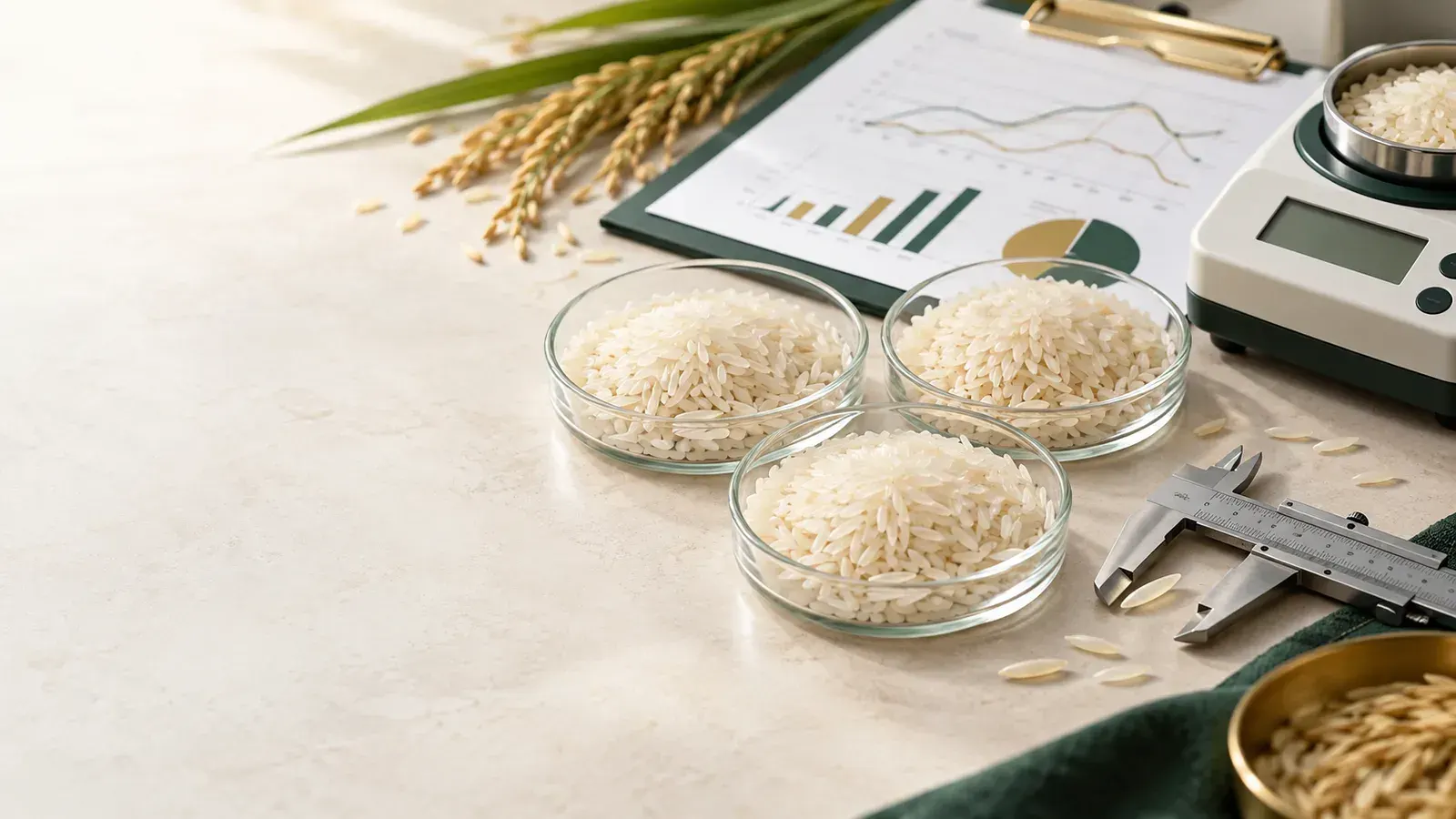
1121 and Super Kernel are two of Pakistan's best-known Basmati varieties. Both are premium long-grain rice, but they create a different impression on the plate, in a retail pack and in a buyer's price architecture.
The right choice is not simply the one with the longest grain. It is the variety that supports your target customer, cooking use, pack position and margin. This guide compares the two varieties so buyers can prepare a more useful quotation request.
The comparison at a glance
| Feature | 1121 Basmati | Super Kernel Basmati |
|---|---|---|
| Grain length | Approx. 8.30 mm | Approx. 7.20 mm |
| Buyer impression | Extra-long, slender grain | Classic aromatic Basmati character |
| Typical retail position | Premium and presentation-led | Everyday premium and repeat purchase |
| Common channels | Premium retail, food service, hospitality | Retail, private label, wholesale distribution |
| Available processing | White, steam and golden sella | White, steam and golden sella |
| Commercial question | Does visible grain length matter most? | Does familiar Basmati aroma matter most? |
The 1121's additional grain length is visible in a clear retail window, on a plate and in product photography. That makes it a strong option when visual presentation is central to the proposition.
Super Kernel has a shorter grain but remains a premium Basmati variety. It is often chosen for its recognisable aromatic character and its fit within an established retail range.
Grain length is only one buying criterion
Grain length is important, but it is not the full specification. Ask to see the intended variety, processing type, broken-grain limit and moisture in the same product brief.
For example, a buyer choosing 1121 for a premium restaurant line may value the elongated appearance after cooking. A buyer building a consistent private-label range may prefer Super Kernel where the customer expects an aromatic Basmati profile and a familiar shelf position.
In both cases, the specification should state the agreed values. Do not rely on the variety name alone.
White, steam and golden sella
Each variety is offered in different processing styles, and processing changes how the rice looks and behaves after cooking.
White rice is the classic milled presentation. It has a bright appearance and lets the variety's natural grain shape and aroma remain most direct.
Steam rice is steamed before milling. Buyers often consider it where they want a firmer grain and stable performance in food-service preparation.
Golden sella is parboiled, which gives the grain its golden colour and a distinctive firm texture. It is often selected for markets that value separate grains and robust handling.
The best way to compare processing is to request samples of the exact varieties and styles you plan to sell. A sample review should cover grain appearance, cooking result, aroma and the final pack presentation.
Match the variety to the channel
Premium retail
1121 is often the stronger lead product when the pack and product story focus on extra-long grain. It works well in a premium range where the rice needs to look distinctive before and after cooking.
Mainstream premium retail
Super Kernel can be a natural fit for customers looking for a recognised aromatic Basmati. It can work as the core product in a Basmati range, with 1121 positioned above it as the extra-long option.
Food service and hospitality
Both varieties can work. The decision should follow the menu, desired plate appearance, cooking method and serving format. Ask kitchen teams to test samples before committing to a container.
Private label
For private label, begin with the intended price point and customer expectation. Then select the variety, processing, pack format and label design that support it. Build the final choice around a written specification and approved sample.
Learn about private-label rice.
Questions to ask a supplier
Before comparing quotations, make sure each supplier is answering the same brief:
- Which exact variety and processing are quoted?
- What grain length, moisture and broken-grain limits apply?
- Is the sample taken from the intended grade?
- Which pack sizes and materials are available?
- What batch evidence can be provided before loading?
- Which Incoterm and destination port are included?
- Can the supplier support label and document preparation for the target market?
FAQ
Is 1121 always better than Super Kernel?
No. 1121 is the longer-grain option, while Super Kernel is often selected for its classic aromatic character. The better choice depends on your customer and range strategy.
Can both varieties be sold under one private label?
Yes. Many ranges use Super Kernel as a core line and 1121 as a premium extra-long alternative, provided each product has a clear specification and pack position.
Which processing should I choose?
Choose white, steam or golden sella based on the intended market and cooking use. Reviewing samples is the most reliable way to decide.
Choose with a product brief, not a guess
Request a quote. Share the variety, processing, quantity, pack size and destination. We can help you compare the practical options and prepare a detailed quotation.