
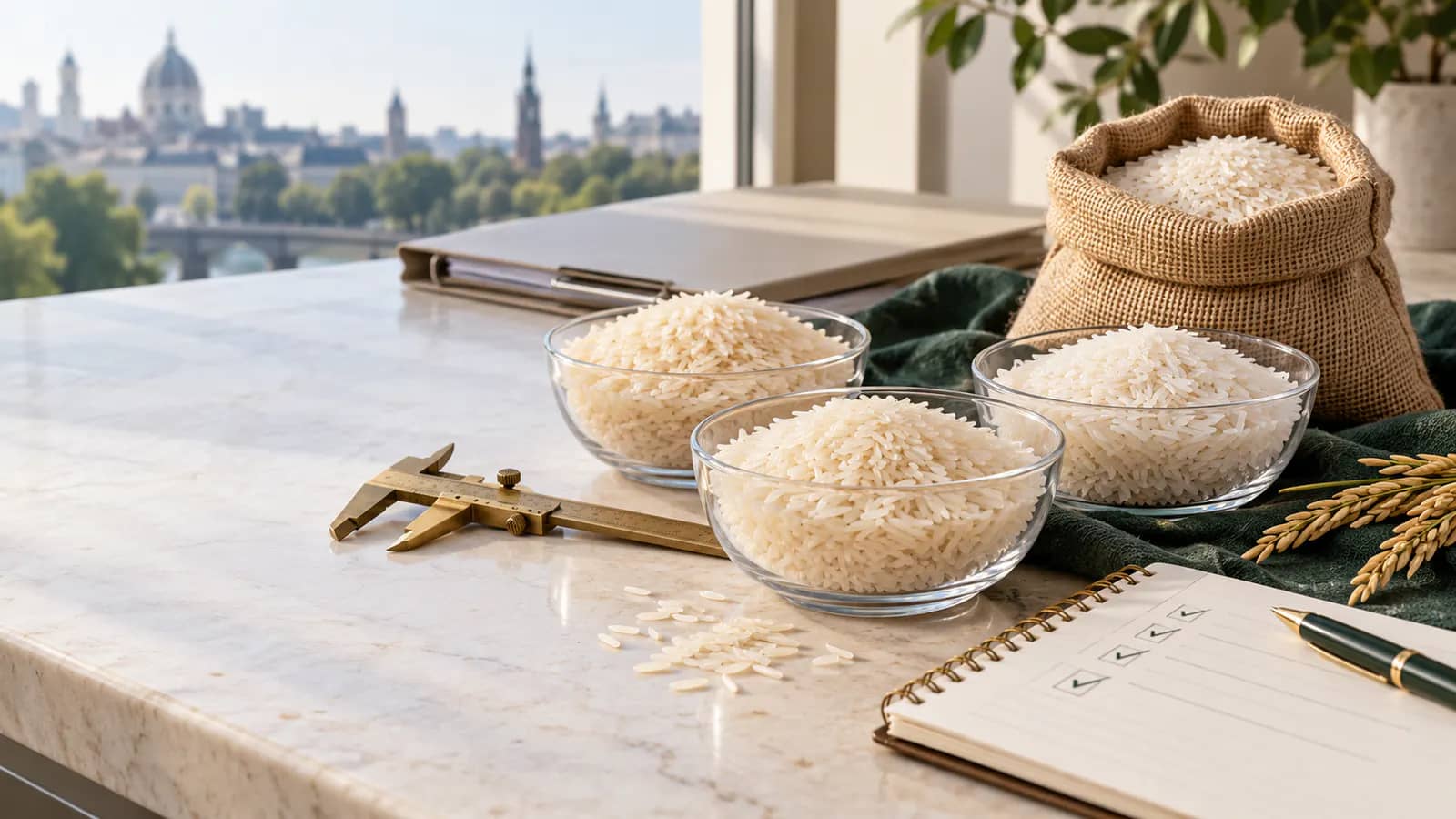
Basmati rice wholesale starts with a clear buying brief
Searching for Basmati rice wholesale can bring up retail packs, marketplaces, brokers and exporters at the same time. For a professional buyer, the first useful step is not comparing a headline price. It is defining exactly what the business needs so that every quotation is comparable.
Whether you buy for food service, distribution, retail or a private-label range, a good brief gives the supplier the information needed to recommend the right grade and pack. It also prevents a common problem: two quotations may both say “Basmati rice”, yet refer to a different variety, processing method, broken percentage, pack format or delivery basis.
Lavish Foods works with buyers who need a quotation built around their market. Start by exploring the Basmati and long-grain product range, then use this checklist to prepare a useful request.
1. Define the sales channel before choosing the variety
The buyer's customer and use case matter. A restaurant group, an ethnic-food distributor, a supermarket buyer and a private-label importer may all need long-grain rice, but they may prioritise different features.
For premium retail and food-service positioning, 1121 Basmati is commonly considered where long grain, presentation and aroma are important. Within that family, 1121 Golden Sella, white rice and steam rice each have a different appearance and cooking profile. A buyer should describe the intended channel instead of only asking for “the best” rice.
For volume-led everyday use, a buyer may also compare varieties such as PK-386 Sella or IRRI grades. The correct choice depends on the target customer, recipe, expected price position and required consistency. A supplier should confirm the exact variety and processing in the quotation.
2. Ask for the specification, not just a product name
A product name is a starting point, not a full commercial specification. Before comparing offers, ask which measurable and descriptive details can be confirmed for the intended batch.
| What to clarify | Why it matters to a wholesale buyer |
|---|---|
| Variety and processing | Differentiates, for example, 1121 Golden Sella, white rice and steam rice. |
| Grain characteristics | Grain length, broken percentage and moisture help buyers compare like with like. |
| Cooking expectation | Matters to food service, catering and repeat retail customers. |
| Quality evidence | Ask what current batch documents or sample process can be made available. |
| Destination market | Lets the supplier discuss pack, labelling, shipping and document needs in context. |
Do not copy figures from one product into another product brief. Catalogue information is a useful guide, but the final commercial specification should be confirmed for the order. If your team needs a data sheet, mention it at the quotation stage. Request a quotation with the variety, market and expected volume, and the export team can advise what is available for review.
3. State the packaging requirement early
Pack format affects the commercial conversation from the beginning. A retail buyer may need a consumer-facing pouch or bag. A distributor may need sacks suitable for onward sale. A bulk buyer may need a different format entirely. It is not enough to write “25 kg” if the material, labelling responsibility, destination and pallet or container plan are still open.
The packaging page explains the starting point for available formats. If you are developing a branded line, add the preferred pack size, material direction, artwork status, languages and destination market to your brief. The private-label service is the correct route when the buyer needs a brand or packaging project rather than a standard product offer.
For first enquiries, the company can discuss pack options from 1 MT for retail and private-label packs. Bulk quantities are normally discussed around a 20 ft container, subject to product, destination and final commercial confirmation. This is a conversation starter, not a stock or delivery promise.
4. Give the volume and destination in useful terms
“How much is a container?” is not enough for an accurate quotation. State the estimated tonnes, the type of pack, whether the purchase is a trial, repeat order or launch, and the destination country or port if known.
This helps the export team distinguish between a sampling conversation and a commercial shipment plan. It also lets them ask the next useful questions about handling, documents and lead time instead of guessing. If you do not yet know the exact volume, give a realistic range and the expected buying frequency.
5. Use the quotation request as a procurement handover
The strongest enquiries do not need to be long. They are simply specific. Include:
- Your company and contact person
- Intended variety or varieties
- Required processing, if known
- Target quantity in MT
- Packaging format and whether it is standard or private label
- Destination country or port
- Intended sales channel and target timing
- Whether you need a sample, a specification discussion or a full commercial quotation
This information helps Lavish Foods respond to the actual requirement rather than sending a generic catalogue. It also creates a sensible written record for your purchasing team.
A practical next step
Start with the full product range and compare the 1121 Golden Sella, PK-386 Sella and relevant pack options. When your brief is ready, request a quotation. Tell us the variety, quantity, packaging and destination. The export team will review the request and confirm the appropriate next steps.