
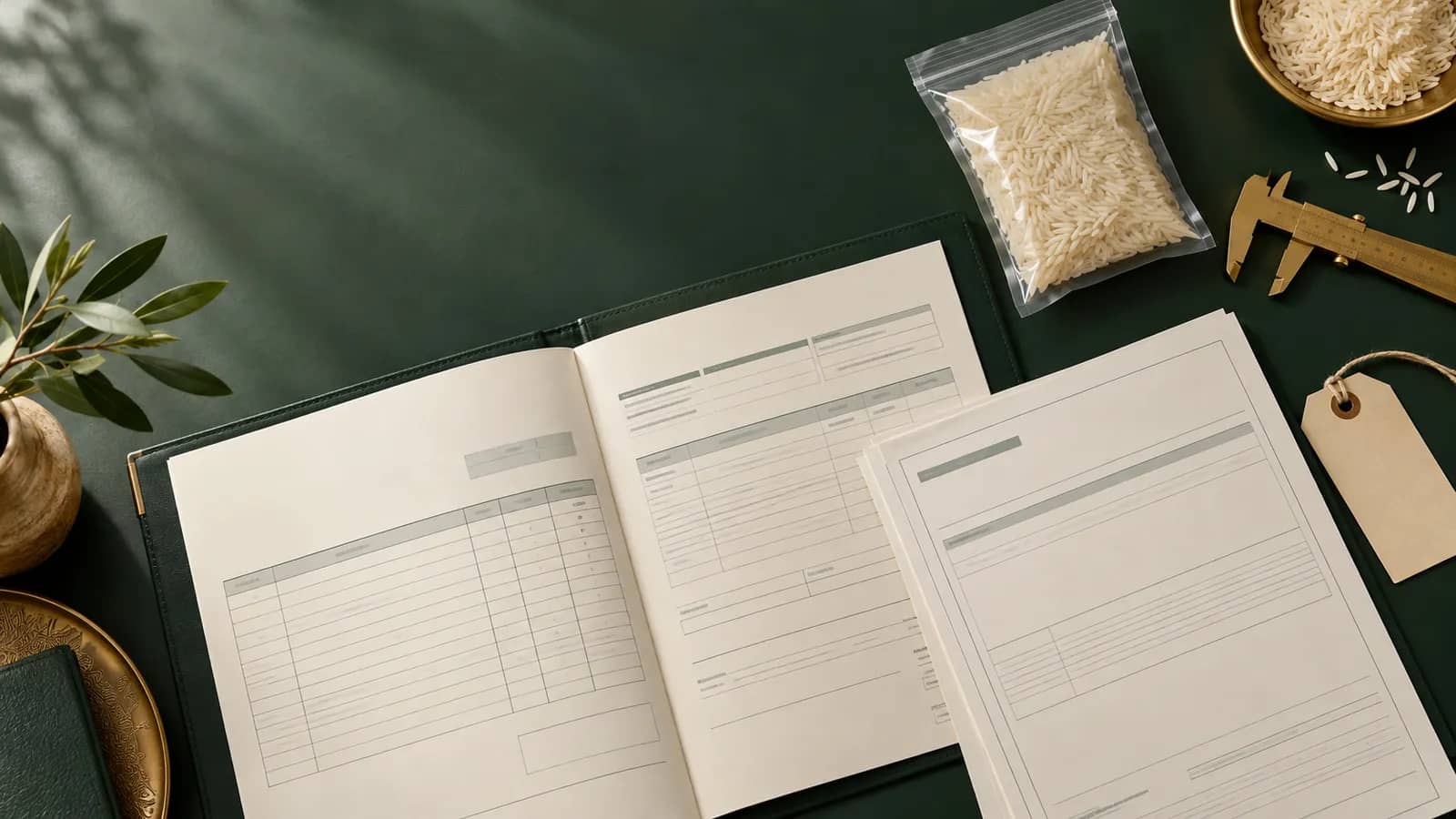
Importing Basmati rice into the European Union is manageable when the commercial, customs and quality checks are prepared before the container is loaded. Most avoidable delays arise from three issues: an incorrect commodity classification, missing or inconsistent documents, or a batch that has not been tested against the buyer's agreed requirements.
This guide is a practical framework for importers. It helps your purchasing team prepare a first order from Pakistan, compare suppliers and brief a customs agent. It is not a substitute for customs or food-law advice for your specific shipment.
1. Confirm the product classification before you buy
Rice is classified under Chapter 10 of the Combined Nomenclature. Milled Basmati rice is commonly declared under HS heading 1006 30. The exact TARIC subheading, duty treatment and any measures still depend on the product, origin and date of import.
Before signing a contract, ask your customs agent to confirm the current TARIC entry for your exact product. Record the agreed commodity code in the purchase contract, together with the product description, processing type and country of origin.
Your product brief should identify:
- variety, such as 1121 or Super Kernel
- processing, such as white, steam or golden sella
- broken-grain percentage and moisture
- pack format and net weight
- destination port and Incoterm
- any buyer-specific laboratory requirements
View the rice range before preparing the brief so that the commercial description and the specification use the same terminology.
2. Treat quality checks as batch-specific
A supplier brochure describes a capability. It does not replace evidence for the specific batch being shipped. For an EU-bound order, agree in writing which analysis or inspection documents are required before loading.
The most useful approach is to define your acceptance criteria in the contract. That normally includes the specification, sample approval process, moisture and broken-grain limits, packaging requirements and the laboratory checks relevant to your market.
For rice intended for the EU market, buyers commonly ask an accredited laboratory to screen the shipment for pesticide residues and relevant contaminants, including aflatoxins where applicable. The current EU rules and limits should always be checked for the exact intended use and product presentation.
Ask for the certificate of analysis to identify the lot or batch. A historic certificate for a different harvest or variety is not enough. If independent loading verification is important for your first order, agree an optional third-party inspection before the container is sealed.
See quality and certification information.
3. Use a document checklist for every shipment
The core documents should be checked against one another before departure. Names, weights, product descriptions and container details must match.
| Document | Why it matters | Buyer check |
|---|---|---|
| Commercial invoice | Customs value and payment record | Product description, quantity, value and Incoterm |
| Packing list | Pack, weight and lot reconciliation | Matches the invoice and container loading |
| Bill of lading | Transport and delivery document | Consignee and notification details are correct |
| Certificate of origin | Confirms origin | Required form and issuer agreed before loading |
| Certificate of analysis | Evidence for the agreed batch | Lot reference and agreed testing scope shown |
| Insurance certificate | Evidence of cargo cover where applicable | Responsibility matches the Incoterm |
| Inspection report | Independent loading check if ordered | Scope, date and container reference shown |
Depending on the product and destination, other documents may be required. Confirm them with your customs agent before production, not when the goods are at the port.
4. Prepare labels and private-label packs early
If you are selling packed rice to consumers in the EU, the final pack must meet the labelling rules of the country where it will be sold. The importing food business is responsible for checking the final artwork and mandatory information.
Provide the target language, pack size, barcode requirements, importer details and any claims before artwork is approved. The earlier this information is agreed, the easier it is to avoid a reprint or a delayed loading date.
For a private-label project, begin with a single written brief. It should combine the product specification, packaging format, artwork files, labels, quantity, destination and desired delivery window.
Discuss private-label packaging.
5. A practical order sequence
- Send the variety, specification, quantity, pack format and destination.
- Review a sample of the selected variety before the first commercial order.
- Confirm the quotation, Incoterm, payment arrangement and production brief.
- Approve artwork and packaging details where relevant.
- Review the agreed batch evidence before loading.
- Check invoice, packing list and transport documents against the purchase order.
- Give the final document pack to your customs agent before arrival.
A 20-foot container commonly carries a commercial quantity of packed rice, while smaller packaged orders may be possible from one tonne depending on the format and destination. Availability and lead time should always be confirmed in the quotation.
FAQ
Do I need an EORI number?
An EU importer normally needs an EORI number to submit customs declarations. Arrange it before the first shipment and share the details with your customs representative.
What is the correct HS code for Basmati rice?
Milled rice is commonly classified under HS 1006 30, but your customs agent should confirm the exact current TARIC subheading for the shipment.
Can I import private-label rice?
Yes, provided the product specification, label content, packaging artwork and importer responsibilities are agreed before production.
Can I ask for a sample?
Yes. A sample is the best way to confirm the variety, grain appearance and cooking result before placing a first commercial order.
Start with a clear brief
Request a quote. Tell us the variety, specification, quantity, pack format and destination. We will prepare a detailed quotation and confirm the practical next steps for your order.