
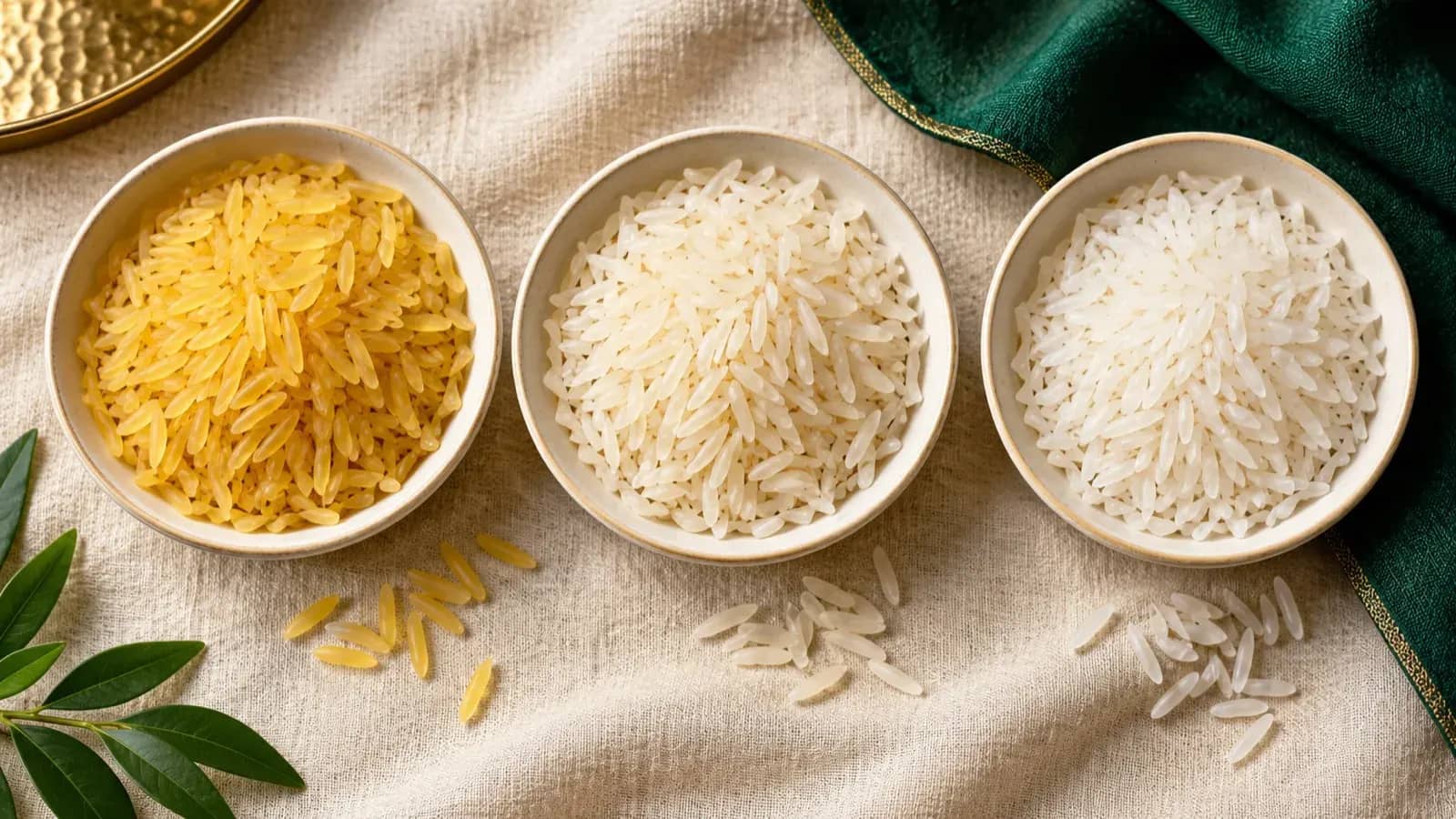
In short: Sella rice is basmati or long-grain rice that is soaked, steamed and dried before husking, in other words, parboiled. This makes the grain firmer, far less likely to break, and fluffy and separate after cooking. "Golden sella" is the more intensively steamed version with a golden grain; "white sella" is the milder, paler one. Sella is the standard rice for restaurants, catering and dishes such as biryani.
If you buy basmati wholesale, you will quickly meet terms like 1121 sella, golden sella or steam. For kitchens, retailers and importers the choice matters: it decides texture, yield, holding time on a buffet and, in the end, customer satisfaction. This guide explains what sella rice is, how it is made and what to check when buying it.
What does sella rice mean?
"Sella" is the trade name used in Pakistan and India for parboiled rice, usually basmati. It describes a process, not a variety. The same variety, 1121 basmati, for example, is sold as white rice, steam rice and sella.
The key difference from ordinary white rice: with sella, the whole grain is treated with water and steam while still in its husk (as paddy). The starch inside partly gelatinises and hardens again as it dries. The result is a glassy, very firm grain that hardly breaks during milling and does not stick when cooked.
How sella rice is made: parboiling in five steps
- Soaking: the paddy is soaked in water for several hours until the grain has absorbed enough moisture.
- Steaming: it is then treated with steam. Time and temperature decide the final colour, longer, more intensive steaming gives golden sella, shorter steaming gives white sella.
- Drying: the steamed paddy is dried back to a storable moisture level. Drying too fast causes cracks and broken grains.
- Husking and polishing: only now are husk and bran removed. Because the grain has hardened, breakage stays very low.
- Sorting: length grading and optical colour sorters remove discoloured, short or broken grains.
At our rice mill in Okara, Punjab, every step happens under one roof, from paddy intake, steaming and drying to colour sorting and packing. See our infrastructure page.
Golden sella vs white sella vs steam rice
| Golden sella | White sella (creamy sella) | Steam rice | |
|---|---|---|---|
| Treatment | Full parboiling, intensive steaming | Full parboiling, milder steaming | Brief steaming only, not fully parboiled |
| Raw colour | Golden, glassy | Creamy white | Light, close to white rice |
| Cooked colour | Light, slightly creamy | White | White |
| Texture | Very firm, grains stay separate | Firm, a little softer | Firm, softer than sella |
| Aroma | Mild | Mild to medium | Stronger, closer to white basmati |
| Typical use | Restaurants, catering, biryani, buffets | Retail and food service where a pale raw grain is preferred | Premium retail, home cooking |
Note: the golden colour comes from steaming alone, a heat reaction between starch and compounds in the bran. No colouring is added. Once cooked, golden sella is much paler than in its raw state.
Sella rice vs basmati rice: what's the difference?
| Feature | Sella (parboiled) | White basmati |
|---|---|---|
| Broken grains after milling | Very low | Somewhat higher, depending on mill and variety |
| Cooking | Practically non-sticky, forgiving if overcooked | Fluffy but more sensitive to too much water |
| Holding hot | Stays separate for a long time, ideal for buffets and catering | Softens faster when held hot |
| Cooking time | Slightly longer | Shorter |
| Aroma | Milder | Stronger basmati fragrance |
| Nutrients | Parboiling keeps part of the B vitamins in the grain that white rice loses with the bran | Fewer B vitamins after polishing |
In short: white basmati wins on fragrance, sella on reliability in the kitchen. That is why restaurants, canteens and caterers mostly use sella, while retail sells both.
Which sella rice for which use?
- 1121 Basmati Golden Sella, the longest grain (catalogue value 8.30 mm) with strong elongation on cooking. First choice for biryani, pulao and restaurants where the grain should impress on the plate. → 1121 Basmati Golden Sella
- Super Kernel Basmati Golden Sella, traditional Pakistani basmati (7.20 mm) with a stronger aroma, for buyers who want fragrance and bite. → Super Kernel Golden Sella
- Super Fine Sella, an extra-fine, slender grain (7.90 mm), a specialty for demanding food service. → Super Fine Sella
- PK-386 Sella and IRRI-9 Sella, economical sella options for canteens, bulk users and price-sensitive markets. Confirm the exact trade description and varietal status for each lot in the specification. → PK-386 Sella · IRRI-9 Sella
What buyers should check
A product name such as "1121 golden sella" says little about the quality of a specific lot. Ask for a specification and check:
- Grain length (average, in mm) and share of short grains
- Broken grains, ≤ 1 % for premium sella
- Moisture, ≤ 13 % for storage and shipping
- Colour uniformity, no mix of pale and dark grains, no spots
- Cooking test, elongation and whether grains stay separate
- Foreign matter and discoloured grains, minimal after optical sorting
- Documents, certificate of analysis per batch and, on request, SGS pre-shipment inspection
A sample before ordering is especially worthwhile with sella, because colour and cooking behaviour can vary between lots. Availability, sample size and terms are confirmed in the quotation.
How to cook sella rice
- Rinse in cold water until the water runs clear.
- Soak for 20, 30 minutes, this shortens cooking time and improves elongation.
- Bring to the boil with about 1.75 to 2 times the volume of water, salt lightly.
- Cover and simmer gently for 15, 20 minutes, then rest for 5 minutes.
- Fluff with a fork. For biryani, sella is par-cooked first and then layered.
In commercial kitchens, sella also works reliably in combi steamers and rice cookers. The exact water ratio depends on variety and lot, a test cook is worth it.
FAQ
Is sella rice basmati? "Sella" describes the process, not the variety. Always check the exact variety and trade description in the specification.
Is sella the same as parboiled rice? Yes. Sella is the trade name for parboiled basmati and long-grain rice from Pakistan and India.
Why is golden sella yellow? Because of intensive steaming in the husk. No colouring is used, and the cooked rice is much paler.
Do you need to wash sella rice? It is recommended: rinsing removes starch dust, and soaking improves grain length after cooking.
Where can I buy sella rice in bulk? Lavish Foods supplies sella rice in agreed pack formats and as private label, from 1 tonne for packs, bulk from one 20 ft container. Available pack sizes and any warehouse stock are confirmed in the individual quotation.
Sella rice from Lavish Foods
We process sella rice in our own mill in Punjab, with controlled parboiling, optical colour sorting and lab testing of every batch. You receive a specification, a sample and a quotation within 24 hours.