
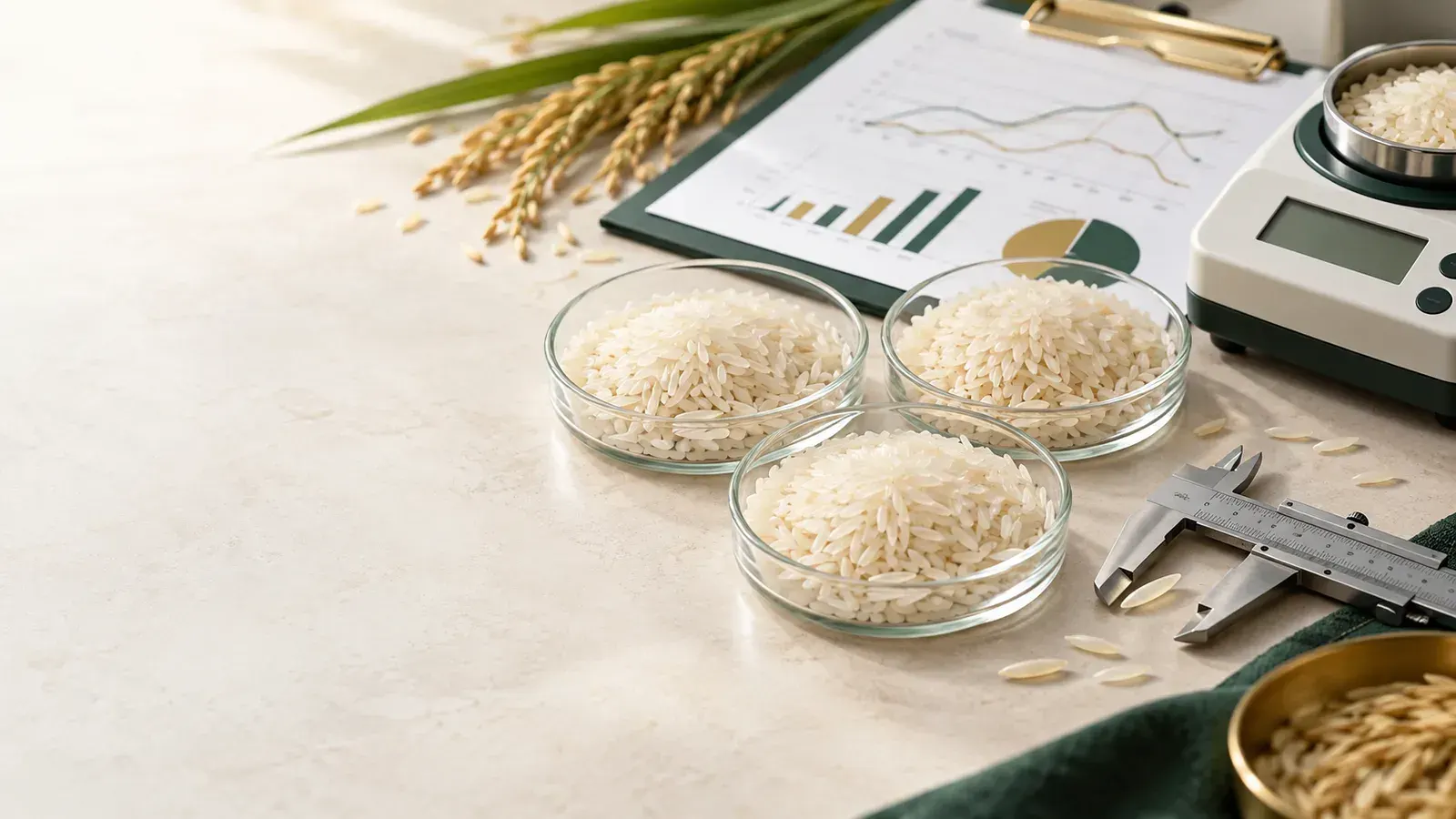
In short: genuine basmati is traditionally grown in the Punjab region of Pakistan and India. The main types of basmati rice in trade are 1121 basmati (the longest grain, ideal for restaurants and biryani), Super Kernel basmati (the aromatic Pakistani classic) and fine specialties such as Super Fine. Each can be offered as white rice, steam rice or sella (parboiled). For other long-grain offerings, always confirm the exact trade description and varietal status in the specification.
"Basmati" is printed on many packs, but the name covers very different varieties, grain lengths and qualities. For wholesale, food-service and retail buyers it pays to look closely: the variety decides price, appearance on the plate, aroma and cooking behaviour. This guide gives you the overview.
What makes basmati basmati?
Basmati is not a single variety but a group of aromatic long-grain varieties with four shared traits:
- Origin: traditionally the Indus and Ganges plains of Punjab; in Pakistan mainly the districts of Okara, Sheikhupura, Hafizabad, Gujranwala and Sialkot. Soil, Himalayan meltwater and hot days with cool nights during ripening shape its character.
- Aroma: the typical nutty, floral fragrance, which comes mainly from the aroma compound 2-acetyl-1-pyrroline, especially pronounced in basmati.
- Grain shape: extra long and slender.
- Elongation on cooking: basmati gets longer rather than wider when cooked. Good lots almost double in length and stay fluffy and separate.
Then there is ageing: quality basmati is often stored for 12 months or more after harvest. Aged rice cooks fluffier, absorbs more water and develops a fuller aroma.
The main types of basmati rice at a glance
| Variety | Origin | Raw grain length (catalogue value) | Aroma | Typical use |
|---|---|---|---|---|
| 1121 basmati | India and Pakistan | up to 8.30 mm | Medium | Restaurants, biryani, premium retail |
| Super Kernel basmati | Pakistan | approx. 7.20 mm | Strong | Retail, home cooking, aroma-focused buyers |
| Super Fine (sella) | Pakistan | approx. 7.90 mm | Mild | Specialty for demanding food service |
| Traditional varieties (e.g. Basmati 370, 385, 386) | India and Pakistan | shorter | Very strong | Delicatessen, lovers of traditional quality |
For comparison, other long-grain offers commonly requested in wholesale. Confirm PK-386's exact varietal and trade description in the specification for each lot:
| Variety | Raw grain length | Aroma | Use |
|---|---|---|---|
| PK-386 (trade description to confirm) | approx. 6.80 mm | Mild | Price-conscious retail, food service |
| IRRI-9 (long grain) | approx. 6.40 mm | Neutral | Bulk users, canteens |
| IRRI-6 (long grain) | approx. 6.20 mm | Neutral | Price-sensitive markets, processing |
1121 basmati: the longest grain
1121 is the best-known modern basmati variety. It was bred in India, released for cultivation in 2003 and is now grown in Pakistan as well. Its hallmark is exceptional grain length: up to 8.30 mm raw in our catalogue and many times more when cooked, the grains turn long and slender and stay separate.
1121 basmati rice comes in three processes:
- 1121 Golden Sella, parboiled, golden raw grain, extremely robust when cooked; the standard for restaurants and biryani. → 1121 Basmati Golden Sella
- 1121 Steam, briefly steamed, white grain with more aroma than sella. → 1121 Basmati Steam Rice
- 1121 White, classic milled and polished, fully aged. → 1121 Basmati White Rice
Best for: restaurants, catering and retail where the look of the long grain matters most.
Super Kernel basmati: Pakistan's aromatic classic
Super Kernel, often simply called "Super Basmati", is the line that made Pakistani rice famous internationally. The grain is a little shorter than 1121 (about 7.20 mm), but the aroma is noticeably stronger. Many South Asian and Middle Eastern customers prefer Super Kernel precisely for its fragrance.
- Super Kernel White, a retail favourite. → Super Kernel Basmati White Rice
- Super Kernel Golden Sella, parboiled for food service, with more aroma than 1121 sella. → Super Kernel Golden Sella
- Super Kernel Steam, bright and firm for the premium shelf. → Super Kernel Basmati Steam Rice
Best for: retail and households expecting real basmati fragrance; flavour-focused food service.
Super Fine and traditional varieties
Super Fine Sella (7.90 mm) is an extra-fine, slender specialty, ideal for restaurants that want an elegant grain. → Super Fine Sella
Older traditional basmati varieties such as Basmati 370 or 385 have shorter grains and lower yields but are considered especially aromatic. Today they are found mainly in the delicatessen segment.
White, steam or sella: processing matters too
| Process | Raw grain | Cooked | Ideal for |
|---|---|---|---|
| White | White, polished | Fluffy, strongest aroma | Retail, home cooking |
| Steam | Light | Firm, aromatic | Premium retail |
| Sella (parboiled) | Golden or creamy white | Very fluffy, non-sticky, holds well | Restaurants, catering, biryani |
More in our guide What is sella rice?
Basmati vs long-grain vs jasmine rice
| Basmati | Long grain (e.g. PK-386, IRRI-9) | Jasmine | |
|---|---|---|---|
| Origin | Punjab (Pakistan, India) | Worldwide, incl. Pakistan | Mainly Thailand |
| Grain | Extra long, very slender | Long, a little wider | Long, softer |
| Aroma | Nutty, floral | Mild to neutral | Sweet, floral |
| Cooked | Fluffy, separate | Fluffy | Slightly sticky |
| Price | Higher | Lower | Medium |
In short: if you want aroma and long grains, choose basmati. If you need large volumes at a good price, long-grain rice such as PK-386 White or IRRI-9 White does the job.
Which basmati rice is best?
There is no single "best" basmati, it depends on the use:
| Use | Our recommendation |
|---|---|
| Restaurant, biryani, buffet | 1121 Golden Sella or Super Kernel Golden Sella |
| Premium retail | 1121 White, Super Kernel White or Steam |
| Aroma-focused customers | Super Kernel basmati |
| Canteen, bulk catering | Super Fine Sella or PK-386 / IRRI-9 Sella, depending on the confirmed specification |
| Private label for retail | 1121 or Super Kernel in suitable, confirmed pack sizes (more on private label) |
How to recognise good basmati
What counts is the specification of a specific lot, not just the variety name:
- Grain length and uniformity, average in mm, few short grains
- Broken grains, ≤ 1 % for premium basmati
- Moisture, ≤ 13 % for safe storage
- Varietal purity, no blending with non-basmati grains
- Ageing, ask for crop year or storage time
- Cooking test, elongation, aroma, grains stay separate
- Documents, certificate of analysis per batch, SGS inspection on request, and the processor's certifications such as ISO 22000 and HACCP (our certificates)
Outlook: new basmati varieties from Pakistan
Breeding continues. The Rice Research Institute in Kala Shah Kaku, Punjab, introduced Sona Super Basmati in 2023 and Sultan Super Basmati in 2025, the latter with a reported grain length of 9.66 mm, the longest in Pakistan so far. It usually takes several harvests before new varieties reach export volumes, though.
FAQ
Are there different types of basmati rice? Yes. The most important in trade are 1121, Super Kernel (Super Basmati) and traditional varieties such as 370 or 385, plus specialties like Super Fine.
What is the difference between basmati and long-grain rice? Basmati is an aromatic long-grain group from Punjab with an extra-long, slender grain that elongates strongly when cooked. Ordinary long-grain rice is shorter, milder and cheaper.
Is 1121 real basmati? Yes, 1121 is a basmati variety, known for its exceptionally long grain; its aroma is a little milder than Super Kernel's.
Is PK-386 basmati? The designation “386” is used differently in the rice trade. Before buying or labelling, ask for written confirmation of the specific variety and trade description so the product page, specification and packaging remain consistent.
Which basmati is best for biryani? 1121 Golden Sella or Super Kernel Golden Sella: the grains stay long and separate when layered and steamed.
Basmati rice from Lavish Foods
We offer 15 rice grades, from 1121 and Super Kernel basmati to PK-386 and IRRI, from our own mill in Okara, Punjab. Delivered from Karachi or straight from our Hamburg warehouse, in bags or as private label.