
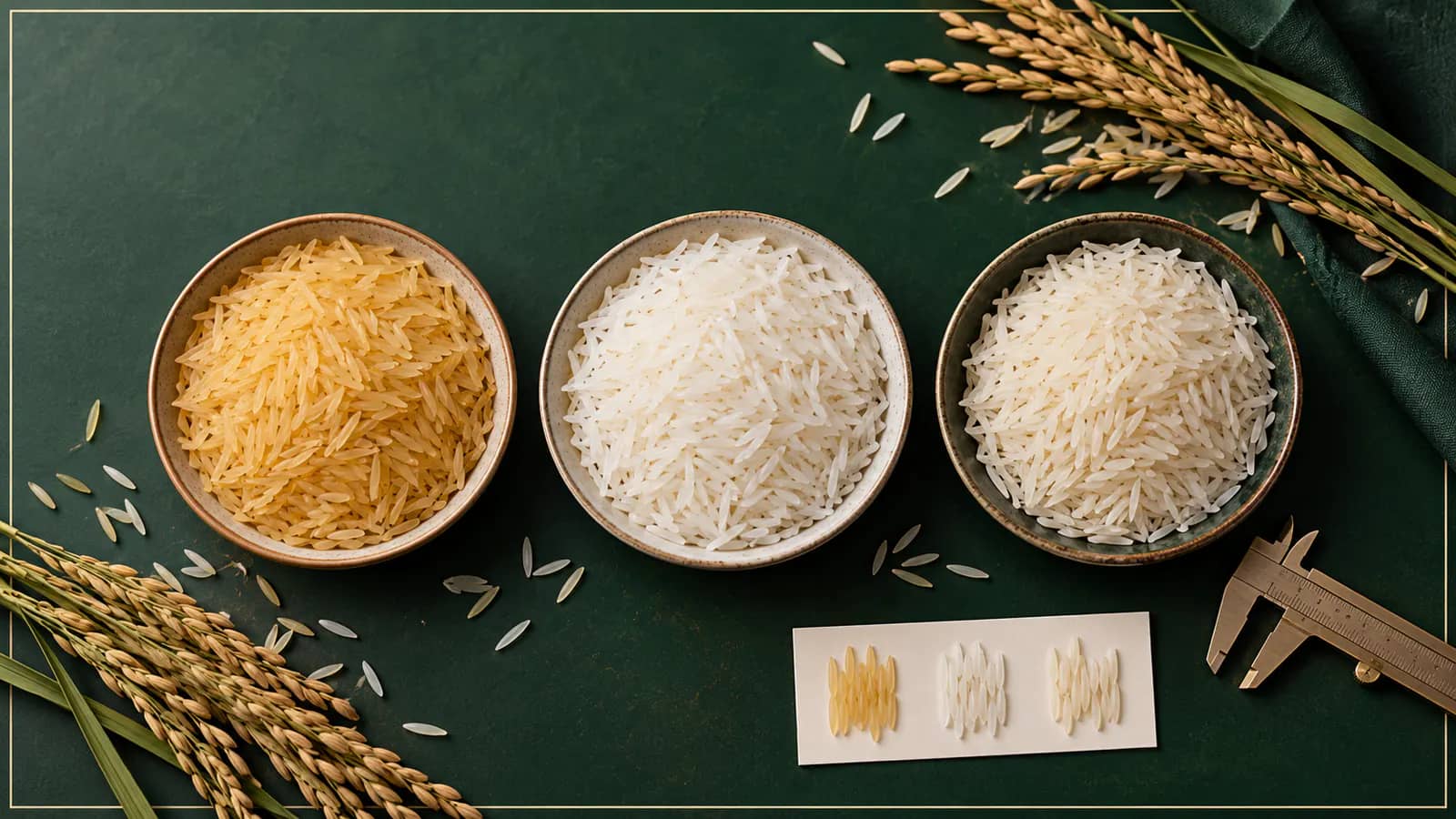
Three Sella and Basmati options, one buying decision
Buyers often ask whether Golden Sella, White Sella or Steam Rice is “best”. There is no universal answer. These are different processing and presentation options, and the best choice depends on what your customer expects in the pack, the kitchen and the market.
For B2B procurement, the goal is to translate a customer need into a clear product brief. This guide explains the practical difference, then shows how to ask for the right confirmation before a quotation or sample decision.
What the names mean
Sella rice is commonly used to describe a parboiled rice process. The paddy is treated before milling, which changes the grain's appearance and cooking behaviour. In the marketplace, the visual result and the degree of processing lead buyers to terms such as Golden Sella and White Sella. Steam rice is another processed option that is usually positioned for a lighter, cleaner appearance.
Those labels are useful commercial shorthand, but they do not replace the variety name or a batch specification. Always request the exact variety, processing and relevant quality details together.
| Option | What a buyer will usually notice | Useful discussion point |
|---|---|---|
| Golden Sella | A distinct warm golden colour and firm grain presentation | Is the target customer looking for a recognisable parboiled product? |
| White Sella | A lighter visual profile while retaining the Sella category | Is the required pack appearance closer to white rice? |
| Steam Rice | A bright, clean grain presentation and processed rice profile | Does the food-service or retail brief prioritise appearance and cooking consistency? |
The words “usually” matter. Final characteristics must be confirmed against the product and the intended shipment. Do not use a generic description as a guarantee of an individual batch.
Start with the customer-facing requirement
For retail, shoppers see the grain colour through the pack or product image, so visual expectations are important. For food service, the customer may care more about separate grains, yield and consistency after cooking. For a private-label project, the variety must fit both the desired shelf position and the artwork or pack concept.
If the brief calls for a visibly golden parboiled rice, begin with 1121 Basmati Golden Sella. If a lighter appearance is required, review 1121 Basmati White Rice and discuss whether it fits the target. For a steam option, see 1121 Basmati Steam Rice. The product pages are a useful starting point, while the quotation process confirms the exact commercial proposition.
What to compare before you request a sample
A sample should answer a commercial question. Before requesting it, write down what your team will inspect. That may include grain appearance, aroma, cooking result, pack suitability and the product position versus your existing range.
Ask your colleagues which of these matters most:
- Is the range premium, mainstream or value-led?
- Is the product intended for retail, food service, catering or distribution?
- Does the buyer need a golden, bright white or neutral-looking grain?
- Will the product be packed under an existing Lavish Foods offer or a private label?
- Which measurement or quality points should be discussed for the proposed batch?
This makes the next conversation more useful than simply requesting a bag of rice. It also helps identify when a second variety should be reviewed alongside the first one.
Packaging can change the right answer
The same variety can be positioned differently depending on the pack, market and customer. A buyer that needs a retail pouch may ask different questions from a buyer planning 25 kg or 50 kg sacks. The choice is not just visual: it affects the product brief, printing process, handling and order plan.
Use the packaging overview to frame the pack discussion. If the rice will carry your own name, begin on the private-label page and include the target market, intended pack size, artwork status and expected volume. Labelling and market requirements should be reviewed by the responsible parties before production.
How to make the quotation request specific
When requesting Golden Sella, White Sella or Steam Rice, include the following:
- The target variety, such as 1121 Basmati.
- The preferred processing or appearance.
- The country and sales channel.
- The anticipated quantity and pack format.
- Whether a sample, batch discussion or commercial quotation is required.
The Sella Rice explainer gives additional background on the processing vocabulary. When you are ready to discuss the commercial option, request a quotation. The export team can then confirm the available grade, packaging discussion and appropriate next step for your market.